Author:
John-Henry Charles
Operational renewables - how we maintain them, how we learn about them, continues to advance. But how we deal with their paperwork is stuck in the past.
Over the last few years, there’s been significant portfolio growth, increased competition, tighter margins, and stricter performance guarantees.
Operations & Maintenance teams are serving ever more MWs but are also under ever more pressure to do more - with the same (or fewer) resources.
Maintenance teams can have hundreds - sometimes thousands - of recurring and ad-hoc activities. Each of these tasks has its own cadence, dependencies, documentation, compliance and budget implications.
And the asset management teams who track the compliance of Operations and Maintenance teams against their obligations are dealing with an ever-growing web of contracts and reports.
The result? A lot of paperwork.
Asset management teams can spend more time reading reports than acting on them. That’s a waste of talent and time. You’re paying a 'paperwork tax' that is compounding as portfolios grow.
So in the age of AI and ever improving digital tooling - how can you get the best out of maintenance teams and documentation?
Let’s introduce you to an assistant that can help you structure the web: Alentis.
Step 1: Build your preventative maintenance context
Every maintenance programme starts with a plan.
Planned Preventative Maintenance schedules define what needs to be inspected, how often, by whom, and against which standards.
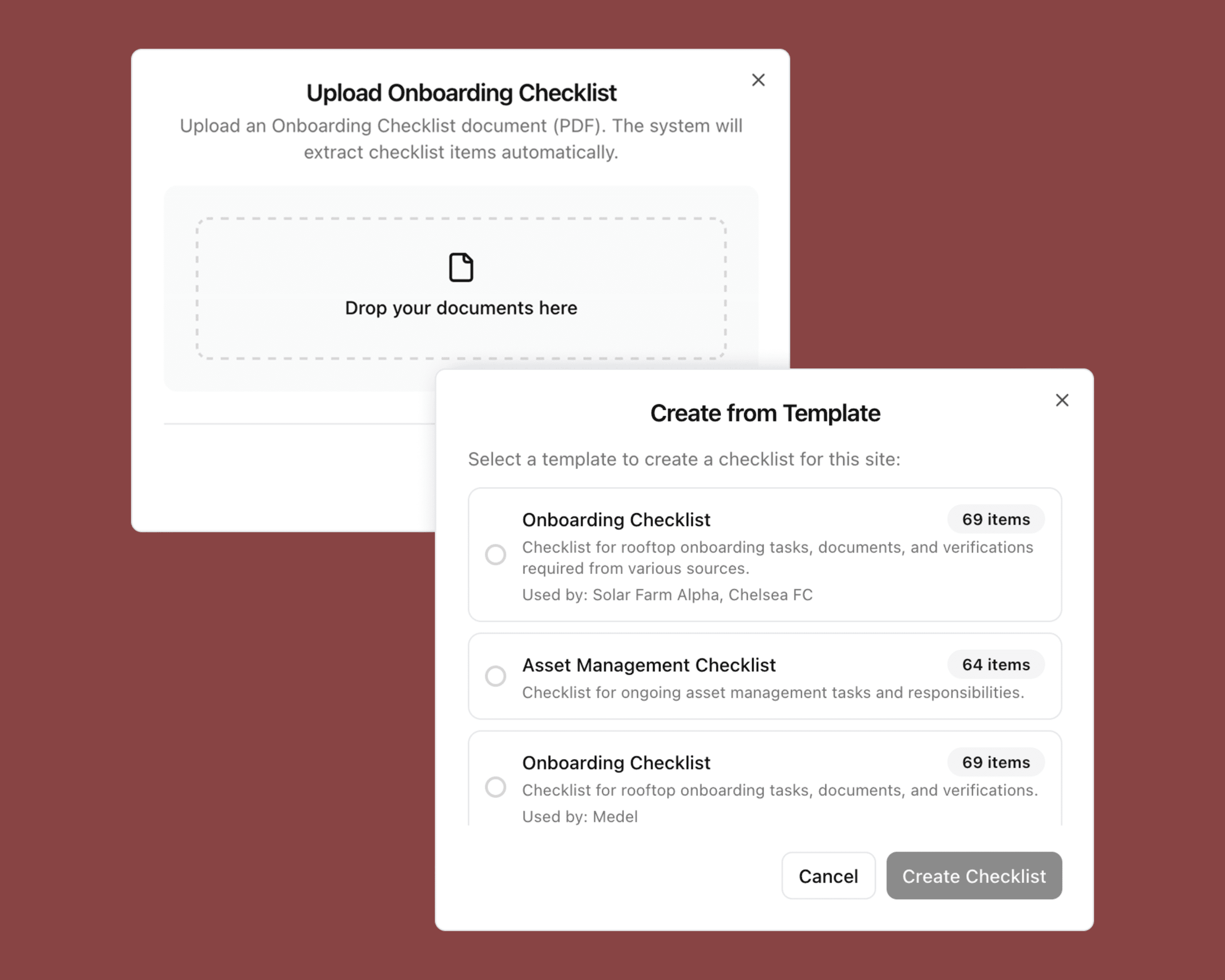
In reality, these schedules arrive in all shapes and sizes: Word documents, PDFs, Excel files, annexes to contracts. The format varies - but the intent is always the same.
At Alentis, we ingest schedules in their existing formats and convert them into a living maintenance framework. This forms the context backbone for tracking your web of inspections, reporting, and follow-on work.
Step 2: Turn Inspection Reports into structured, actionable and queryable data
This is where most O&M workflows break down.
Preventative maintenance reports can be hundreds of pages long. Buried inside them are the insights that matter: Non-compliant findings, Recommendations, Early signs of degradation, Safety-critical issues.
Traditionally, extracting this information means someone manually reading every page, highlighting comments, and re-entering tasks elsewhere. Tracking against the contracts. That doesn’t scale.
Instead with Alentis, inspection reports are uploaded directly into the platform. Alentis then extracts only what matters - and how it compares to the contract.
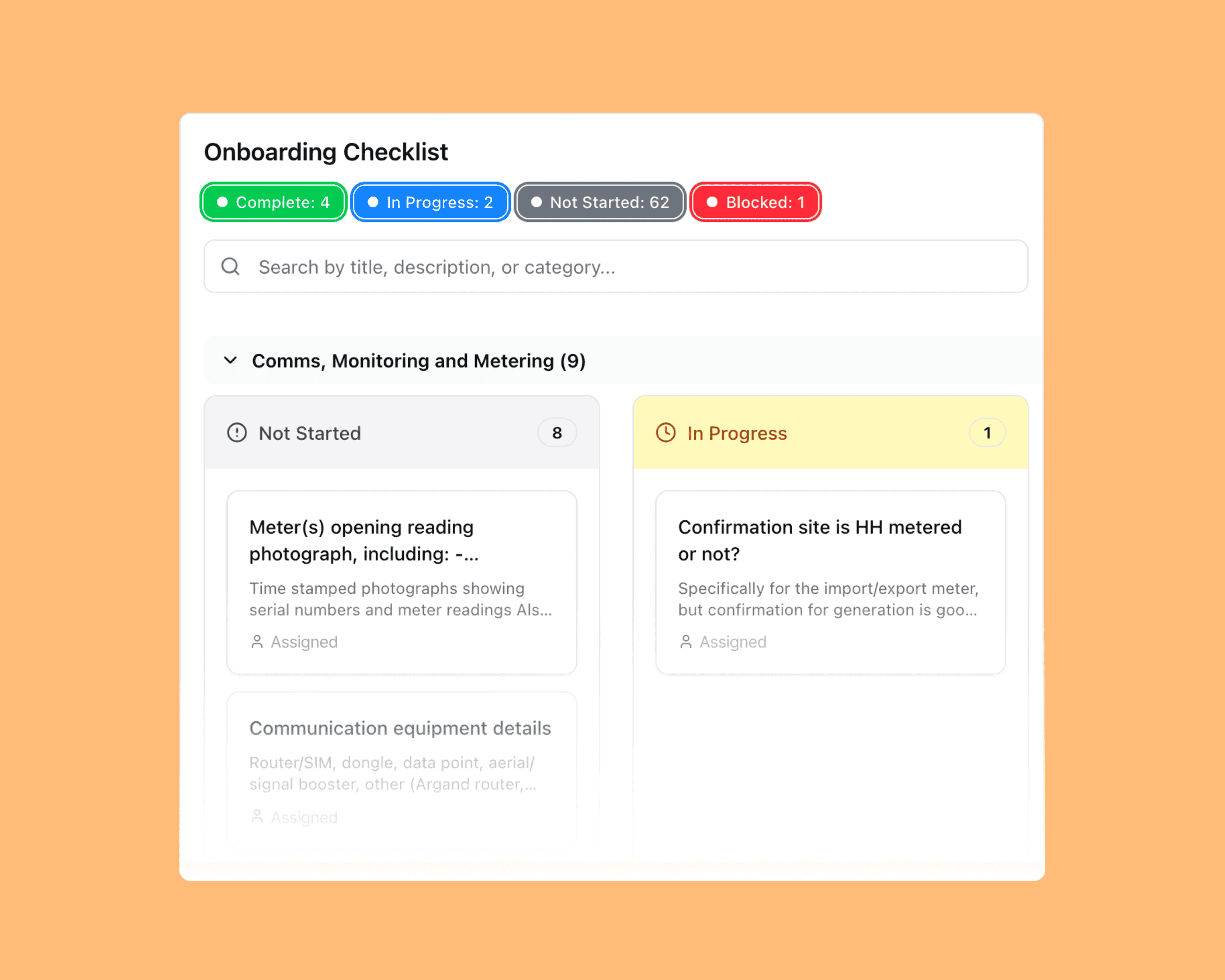
Instead of a 300-page PDF, asset managers see a clean, structured list of actionable issues - ready for review and execution.
The impact is immediate: No manual triage. No missed recommendations. No ambiguity about what needs to be done
Step 3: A connected ecosystem of contracts, preventative, corrective and additional work
When a preventative job is completed, it matches 1:1 against the contractual schedule.
We can identify the required corrective maintenance solutions. If the job is done, we can use corrective documentation to automatically identify the related preventative maintenance job.
Records are categorised and contextualized. Trends can be spotted across sites, prioritisation can be done based on risk and performance impact.
The same with additional works. Asset upgrades, design improvements, non-standard repairs, enhancements beyond contractual scope can be structured, analyzed and assessed.
This enables teams to shift from reactive firefighting to proactive intervention. Issues can be fixed before they escalate.
And by structuring this data, you are building an institutional memory that survives personnel changes and ensures contract compliance is audit-ready at a moment's notice.
Moving from documentation to decision-making
Operations and maintenance in renewables doesn’t suffer from a lack of data - it suffers from a lack of usable data.
Alentis turns documentation into context around which you can make decisions. We’ve built our maintenance workflows alongside utility-scale operators who needed something better than spreadsheets and shared drives - without ripping out their existing processes.
The result is an asset management workflow that scales with portfolios, surfaces issues instantly, and lets teams focus on what actually matters: maximising asset value.


